
The book Dr. Lindsay Gibson calls
the best book on relational trauma and recovery that I've ever read"!

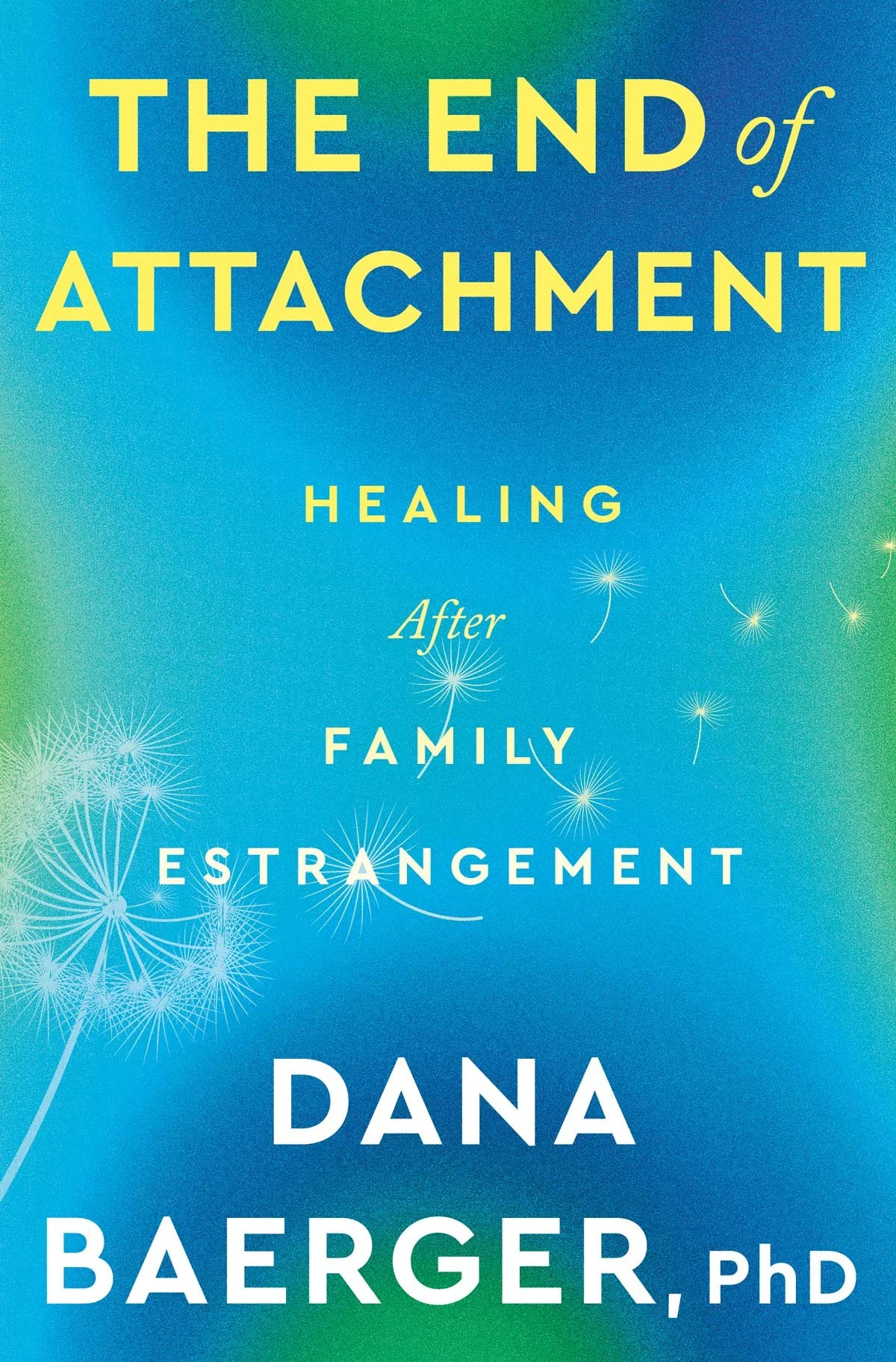
The End of Attachment
A compassionate exploration of the experience of estrangement, featuring the first science-based framework that identifies different subtypes of family distance.
from the publisher
Renowned psychologist Dr. Dana Baerger takes a fresh, science-informed approach to navigating trauma-driven family rupture, helping estranged adult children navigate the best path forward— whether that means reconciliation or continued distance.
Estrangement affects an estimated 90 million people in the U.S. alone, yet our understanding of this widespread phenomenon remains outdated and oversimplified, often privileging the perspective of estranged parents and promoting reconciliation as the only goal. In The End of Attachment, Dr. Baerger expertly blends cutting-edge science with clinical wisdom to correct the myths around estrangement and guide readers through a process of self-reflection, explaining why peace doesn’t always include reconciliation.
Dr. Baerger uses research to illuminate different types of family estrangement, helping readers identify constructive ways to move forward.
She also introduces the concept of Posttraumatic Family Estrangement, a term she developed to describe a type of estrangement driven by unresolved intergenerational trauma rather than by typical family conflict. This groundbreaking framework synthesizes new insights from attachment theory and interpersonal neurobiology to explain how the experience of family harm rewires the brain and nervous system.
Readers will learn to tend to their well-being by making choices from a place of compassion and self-respect. They’ll be empowered with practical tools that support healthy connection, emotional resilience, and a deep sense of purpose. And they will gain clarity on whether repair is possible, or whether stepping away from destructive family patterns is a necessary act of survival.


My clinical work draws on affective neuroscience, interpersonal neurobiology, attachment theory, developmental psychology, trauma research, and experiential psychotherapy. Through my work with adults who have experienced early relational trauma, I've identified a distinct subtype of family estrangement that I call PTFE.
-

For Clients
PTFE develops in the context of relational trauma, when longstanding patterns of family harm persist into adulthood without meaningful acknowledgment or repair. Because PTFE differs in important ways from other forms of family distance, it also calls for a different therapeutic approach. I've developed a way of working with adults experiencing PTFE that addresses both the effects of relational trauma and the complex challenges of navigating family estrangement.
-

For Mental Health Professionals
I'm currently training mental health professionals to recognize and assess different subtypes of family estrangement, with particular attention to PTFE. These trainings focus on distinguishing among different forms of family distance so that clinicians can bring greater sensitivity and clinical precision to their work with clients. For more information, please feel free to reach out to us directly.